

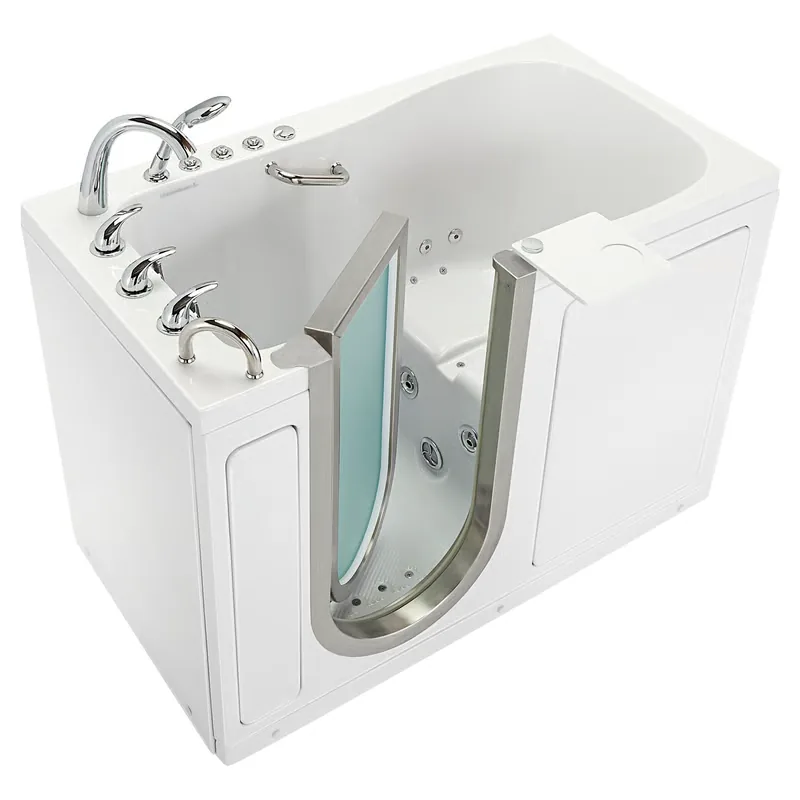
Why are getting in and out the risky part?
Most of a walk-in tub bath happens sitting down, which is the safest position you can be in. The risk sits at the edges: the few seconds you spend stepping in, turning, lowering yourself, rising and stepping out. Those are the moments when one foot is off the floor, your weight shifts, and your hands are looking for something to hold.
The numbers back this up. In a CDC study of emergency visits for bathroom injuries among people 15 and older, published in MMWR in 2011, 81.1% of the injuries were caused by falls, 68.3% happened in or near the tub or shower, and injury rates climbed sharply with age. Arthritis and balance problems make those transition moments harder: stiff hips and knees limit how high you can lift a foot, sore hands weaken your grip, and slow balance reactions give you less time to recover from a slip.
The CDC's Stay Independent brochure, part of its STEADI fall-prevention program, lists warning signs worth knowing here. Feeling unsteady when walking, steadying yourself on furniture, needing to push with your hands to stand up from a chair, and trouble stepping up onto a curb are all on its list. If several of those describe you, plan your tub around them rather than hoping for a good day.
What are the four moments, and what helps with each?
| Moment | What makes it hard | What helps | Check on the spec sheet |
|---|---|---|---|
| 1. Stepping in | Lifting a stiff leg over the threshold while standing on the other | The lowest step-in that fits your room; a grab bar right at the door; a transfer tub if you can't step | Step-in height in inches; door width |
| 2. Turning and sitting | Pivoting in a narrow space and lowering yourself with sore knees or hips | A door opening wide enough to turn; a seat at the right height; a bar to hold as you lower | Seat height and width; door opening |
| 3. Standing up | Wet skin, warm muscles and weak legs after sitting through the drain | A seat high enough to rise from; a grab bar where your hand lands; a few seconds sitting upright before you rise | Seat height; grab-bar position |
| 4. Stepping out | Wet feet on a smooth floor outside the tub | Textured tub floor; a non-slip mat outside; a towel within reach before you stand | Textured floor; door swing direction |
How do I get into a walk-in tub safely?
- Set up first. Put your towel, robe and anything you need within reach of the seat. Lay a non-slip mat outside the door. Check the water temperature setting before you start.
- Open the door and face the seat side. Stand close to the threshold with a firm grip on the grab bar by the door. Towel bars and soap dishes are not built to hold your weight.
- Lead with your stronger leg unless your therapist has told you otherwise. Lift it over the threshold, set it down flat, then bring the other leg in.
- Turn, back up to the seat and sit slowly, holding the bar until you feel the seat behind your legs.
- Close and latch the door, then fill. With most walk-in tubs you sit while the tub fills, because the door has to be sealed before water goes in.
How do I get out without slipping?
- Drain fully while seated. The door stays sealed until the water is out. Use the time to rinse with a handheld shower and drape a towel over your shoulders so you don't get cold.
- Sit upright for a moment before you stand. Warm water can leave you light-headed, and the CDC brochure lists feeling light-headed from medicines as a fall warning sign too.
- Scoot forward, feet flat, hand on the bar, and stand. Pause once you are up.
- Open the door, step out with your stronger leg onto the mat, and keep one hand on the bar until both feet are out.
- Sit to dry off if you can, on a stable chair or the closed toilet lid, rather than balancing on one leg.
If you have had a hip or knee replacement, use the leg sequence your own surgeon or therapist gives you; it depends on your surgical approach. Our guide to walk-in tubs after hip or knee replacement covers that in detail.
What changes if I use a cane or walker?
A cane or walker does its job on dry floor, but it cannot come into the tub with you, so the plan is about where it waits. Park it within arm's reach of the door, facing the way you will need it when you come out, and make sure the brakes are on if it has wheels. Then switch your grip from the walker to the grab bar before you lift a foot, never with one hand on each.
Door direction matters more with a walker. An outward-swing door leaves the whole opening clear, so the walker can stand close to the threshold. An inward-swing door takes up some of the space inside the tub as it opens, which can leave less room to turn. Neither is wrong; it depends on how much open floor you have in front of the tub. Before you buy, stand where the tub would go with your walker and act out the turn. If you need a second person to steady you, plan for the space they will stand in, too.
Finally, think about the walk from the tub to where you dress. Wet feet and a walker on a smooth floor are a poor mix, so a non-slip mat, a seat to dry off on, and a clear path without rugs or cords are as important as anything inside the tub.
Can I test this at home before I buy?
You can get a fair idea with a few safe practice moves in your own home. Do them with someone nearby and stop if anything hurts. Tick each one you can do comfortably, then see what it suggests.
Which features matter most for arthritis?
- Step-in height. Ask for the number in inches for each model. Lower is easier, but even a few inches matters if your hips or knees are stiff. If stepping is out of reach, a transfer tub opens down to the seat so you slide in.
- Seat height. The 2010 ADA Standards put bathtub seats at 17 to 19 inches above the floor (section 610.2). Compare your best chair at home with each tub's spec-sheet seat height. MedlinePlus advises people with a new hip to keep hips higher than knees when sitting, a good rule for stiff hips in general.
- Grab bars. One at the door, one where you push up from the seat. Bars you can wrap your hand around are easier on arthritic fingers than flat handles.
- Easy controls and door latch. Lever handles and a latch you can close with a flat hand or forearm help if gripping and twisting hurt.
- Handheld shower. Rinse while seated and before the drain, with no reaching overhead.
- Anti-scald protection. The U.S. Consumer Product Safety Commission urges setting water heaters to 120°F and notes most tap-water scald injuries happen to older adults and young children. A tub with a thermostatic or anti-scald valve adds a second layer.
- Textured floor and a door that suits your room. Inward doors save floor space; outward doors leave the opening clear for a walker.
Jets and heated features are comfort choices, not safety features, so decide on them after the fit is right.
What if the self-check says a tub isn't right?
That is useful to know before you spend money. If stepping over even a low ledge is unsafe, look at transfer tubs or a roll-in shower. If standing up from a chair already needs help, a shower with a seat and room for a helper may be simpler day to day. Aging Safely Baths' roll-in shower guide explains the options, and complete roll-in shower kits are available at Showers4Less.
To put all of this together, take our walk-in tub fit check. It asks nine questions about your step, standing, joints, mobility aids and space, and points to a tub type, or a shower, with the spec-sheet numbers to check. Then browse walk-in tub models or call 1-888-779-2284 to talk it through with a person.
Medical note: This guide is general information based on CDC, Access Board, CPSC and MedlinePlus sources checked October 22, 2026. It is not medical advice. If you have arthritis, a balance disorder or a recent fall, ask your doctor or an occupational therapist what is safe for you.