

What's actually different about bathing alone?
Nothing about the tub changes. What changes is that nobody's in the next room if something goes sideways. According to the Administration for Community Living's 2023 Profile of Older Americans, about 28% of adults 65 and older who live in the community live alone. So if that's you, you're making a decision lots of people make, and the goal is simple: set things up so that a small problem stays small.
The bathroom deserves the extra thought. A CDC analysis of emergency room visits found that 81.1% of nonfatal bathroom injuries were caused by falls, and about two-thirds happened in or near the tub or shower. A walk-in tub takes away the high wall you'd otherwise climb over, and gives you a seat instead of the floor. That's the big win. The rest of this page covers the parts a brochure skips.
What happens if I feel unwell while the tub is full?
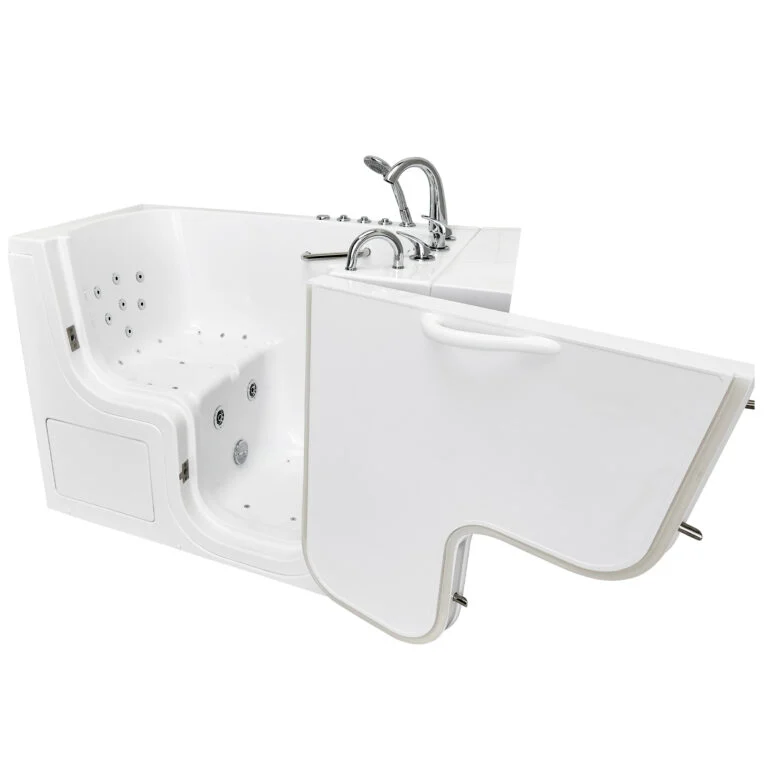
This is the question people living alone ask us most, and it deserves a straight answer. On most walk-in tubs, the door is pressure-sealed: it opens when the tub is empty and stays watertight when it's full. That's how the industry standard for these tubs, ASME A112.19.15, describes the door. In practice, it means you can't swing the door open and get out while there's water in the tub. You open the drain, wait for it to empty, then open the door.
For most people, most of the time, that's a non-event. You're sitting on a seat, not lying flat, and draining takes a few minutes. But if you're alone it's worth planning for the rare moment you feel dizzy, overheated or unwell:
- Reach the drain without leaning. The drain control should be within easy reach of the seat. Check this on the showroom floor or the spec drawing.
- Ask about a quick or fast drain. Many tubs offer a faster drain option. It's one of the most useful upgrades for someone bathing solo.
- Keep the water moderate. Very hot water is the most common reason people feel light-headed in a bath. CPSC recommends water heaters be set at 120°F, and bath water should be mixed cooler than that.
- Consider an outward-opening door. Outward doors, common on transfer-style tubs, give a responder more room to help you once the tub drains, and make it easier to step out.
How do I call for help from the tub?
Layer it, so if one method fails another works.
| Option | Why it helps when you live alone | What to check |
|---|---|---|
| Waterproof alert pendant or wristband | Works from the seat, even in the water, with one press | Confirm it's rated for bathing, not just splashes, and test it monthly |
| Smartwatch with fall detection | Can call for help automatically after a hard fall | Water rating, whether it calls a person or a contact, battery habits |
| Phone in a dry spot within reach | Lets you call a neighbor or family member, not just 911 | Reachable from the seat without leaning; a small shelf or caddy works |
| Smart speaker in the bathroom | Voice calling with wet hands | Set up calling to named contacts and test it from the tub |
| Daily check-in routine | Someone notices if you don't check in | A text at a set time, or a call-in service offered by some local agencies on aging |
One more practical step: leave the bathroom door unlocked when you bathe, and consider giving a trusted neighbor a key or a lockbox code. Help that can't get in can't help.
Want a tub set up for bathing on your own? Call 1-888-779-2284 (7am to 8pm Mountain, 7 days) or use the free quote form. Tell us what your feet, hands and balance are like and we'll match you to seat heights, controls and step-ins, or tell you honestly if a shower fits better.
Which tub features matter most when you bathe alone?
- Controls within reach of the seat. Faucet, drain and handheld shower all usable without standing or stretching.
- A quick drain. Less waiting with the door sealed.
- Grab bars where your hands land. One by the door, one by the seat. With nobody to steady you, these do the steadying.
- A low threshold and a textured floor. Fewer high steps on wet feet.
- An anti-scald mixing valve. It caps the outlet temperature so a pressure change elsewhere in the house can't send scalding water your way.
- A door style you can manage. Inward doors seal with water pressure and suit most bathrooms. Outward doors are easier to step through and leave room for a helper. Try both if you can.
- A seat height you can rise from. The 2010 ADA Standards put tub seats at 17 to 19 inches. If you need a higher seat to stand easily, our fit check will flag it.
A simple solo bath routine
- Put your alert button on and your phone in its spot. Unlock the bathroom door.
- Lay out your towel and clothes within reach of the door.
- Step in, sit down, close the door, then start the fill. Check the temperature with a bath thermometer as it fills.
- Enjoy your soak, and keep it to a sensible length if warm water tends to make you sleepy or light-headed.
- Open the drain. Rinse with the handheld shower while it empties.
- Sit for a few seconds after it drains, then stand using the grab bar.
- Pause at the door before stepping out onto a dry, non-slip mat.
If you have arthritis, a new joint or shaky balance, our guide to getting in and out of a walk-in tub goes step by step through the transfer.
When is a shower the better choice for someone living alone?
We sell walk-in tubs, and we'll still tell you a shower is sometimes the better solo setup. A low-threshold or roll-in shower with a fold-down seat and a handheld shower has no door that waits on a drain, so you can step out the moment you want to. If you have a heart condition, a history of fainting, or a clinician who's told you to avoid hot baths, start there. If a warm seated soak is something you'd really miss, a walk-in tub with a quick drain and the alert setup above is a reasonable choice. Aging Safely Baths' guide to the real complaints about walk-in tubs is a good, honest read before you decide. No bathing product eliminates the risk of falls; products are designed to reduce risk when installed and used properly.
What should I ask before I buy?
- How long does this model take to drain, and is a quick drain available?
- Can I reach the drain, faucet and handheld shower from the seat?
- Is the door inward or outward, and can I try both?
- What is the seat height and step-in height on the spec sheet?
- Will you set the mixing valve's maximum temperature and show me?
- Who do I call if the door seal or drain ever gives me trouble?
Bring the list when you call 1-888-779-2284, or browse our walk-in tub models first. If you have diabetes or numb feet, read our page on walk-in tubs with diabetes or neuropathy too.
Questions about bathing on your own? Call 1-888-779-2284 (7am to 8pm Mountain, 7 days) or use the free quote form. Tell us what your feet, hands and balance are like and we'll match you to seat heights, controls and step-ins, or tell you honestly if a shower fits better.
Sources
- Administration for Community Living, 2023 Profile of Older Americans, checked October 25, 2026
- CDC, Nonfatal Bathroom Injuries Among Persons Aged 15 or Older, United States, 2008 (MMWR, June 2011)
- U.S. Consumer Product Safety Commission, Avoiding Tap Water Scalds
- ASME A112.19.15, Bathtubs/Whirlpool Bathtubs with Pressure Sealed Doors (standard title and scope)
- U.S. Access Board, 2010 ADA Standards, section 610
Note: General safety information, checked October 25, 2026. It is not medical advice. If you have a heart condition, fainting spells or another health concern, ask your doctor about bathing on your own.